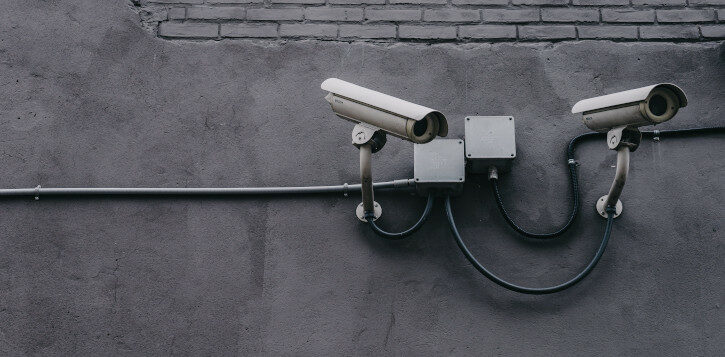
With the increase of remote working and the array of new technology and artificial intelligence available, many organisations are considering how they can monitor their employees. Whilst employee monitoring is permitted under data protection and human rights legislation, organisations need to ensure they comply with their data protection obligations.
What is employee monitoring?
The Information Commission’s Office (ICO) defines ‘monitoring employees’ as any form of monitoring of people who carry out work on an organisation’s behalf.
While advances in technology have resulted in employers having more sophisticated ways to see what their employees are doing, employee monitoring has existed for a while in various guises:
- Camera surveillance
- Webcams
- Timekeeping technology
- Inspecting browser history
When is employee monitoring permitted?
To lawfully process information obtained from monitoring employees, organisations must comply with Article 6(1) of the GDPR. Organisations must identify a lawful basis for processing data:
- Consent – A person can freely give consent however this is usually inappropriate in the employment context due to the imbalance of power between employer and employee.
- Contractual basis – An employer cannot perform their side of the contract without employee monitoring.
- Legal obligation – Where employee monitoring is required by law. Usually applies to regulated industries with mandatory surveillance requirements.
- Vital interests – Where monitoring is needed to protect someone’s life
- Public task – Processing is necessary to perform a task in the public interest or for official functions; this is most relevant to public authorities.
- Legitimate interests – Where the processing is necessary for legitimate interests or those of a third party, unless the risks to the workers’ rights override them.
Using the legitimate interests basis
Legitimate interests is a flexible basis covering many circumstances, making it a likely choice for organisations monitoring employees.
Employers relying on this basis must satisfy a three-part test:
- Purpose – identify a legitimate business
- Necessity – establish whether processing is necessary for that purpose.
- Balancing – check whether the individual’s interests, rights or freedoms override that interest.
Purpose:
Identify a genuine, lawful and specific business interest, such as:
- Protecting systems from cyber threats
- Preventing fraud or theft
- Ensuring regulatory compliance
- Protecting confidential information
- Monitoring productivity for a genuine business need
Necessity:
Consider less intrusive alternatives, such as staff training or regular performance reviews.
Convenience alone does not justify monitoring.
Balancing:
Balance the employer’s interests against employees’ rights, interests and freedoms.
Consider:
- Employees’ reasonable privacy expectations
- The impact on employees
- Whether special category data may be collected
For further in-depth guidance on using the legitimate interests basis, see the ICO’s guidance on applying the three-part test.
Other considerations
Data Protection Impact Assessment (DPIA):
Organisations must carry out a DPIA before undertaking any processing likely to cause risk to employees’ and third parties’ interests.
Examples of high-risk processing includes:
- Processing biometric data of workers
- Keystroke monitoring of workers
- Monitoring that may result in financial loss
Transparency:
When processing data obtained through employee monitoring, employers must ensure employees are aware of what information is being collected, the process of collection and why their information is being processed.
Inappropriate monitoring
Penalties for inappropriate monitoring include:
- Regulatory fines (up to £17.5m or 4% of worldwide turnover, whichever is greater)
- Incurring costs associated with regulatory investigations and court proceedings
- Reputational damage
Employee monitoring checklist
Before introducing employee monitoring, check that you have:
- Identified a lawful basis for monitoring
- If using the legitimate interests basis, applied the three-part test
- Considered if a DPIA is needed
- Informed employees about what, how and why their data is being processed
How Clarkslegal can help
Navigating employee monitoring can be complex, particularly where privacy rights and data protection obligations intersect. Our Employment and Data Protection specialists can help ensure your monitoring practices are lawful, proportionate and compliant.